EXPERTISE · AREA B
Varicose veins & venous disease
I first consider how leg symptoms affect daily life, then look for treatment that fits the symptoms and vascular anatomy, including discomfort during recovery.
Clinical background
- Dr. Seo treats varicose veins and chronic venous insufficiency at da Re-Fit Clinic as a cardiothoracic and vascular surgeon.
- He gave three presentations at Korean Society for Phlebology meetings in 2024–2025, on generalized urticaria after cyanoacrylate closure and post-sclerotherapy pigmentation.
- For prevention of pigmentation and phlebitis after mechanochemical ablation, Asian Venous Forum 2026 featured a retrospective comparative study abstract.
Care principles & decisions
I first listen to which leg symptoms trouble patients and what they hope will change in daily life. Symptoms and vascular anatomy guide the search for suitable care.
- Assess symptoms — Determine whether heaviness, swelling, pain and night cramps are related to veins.
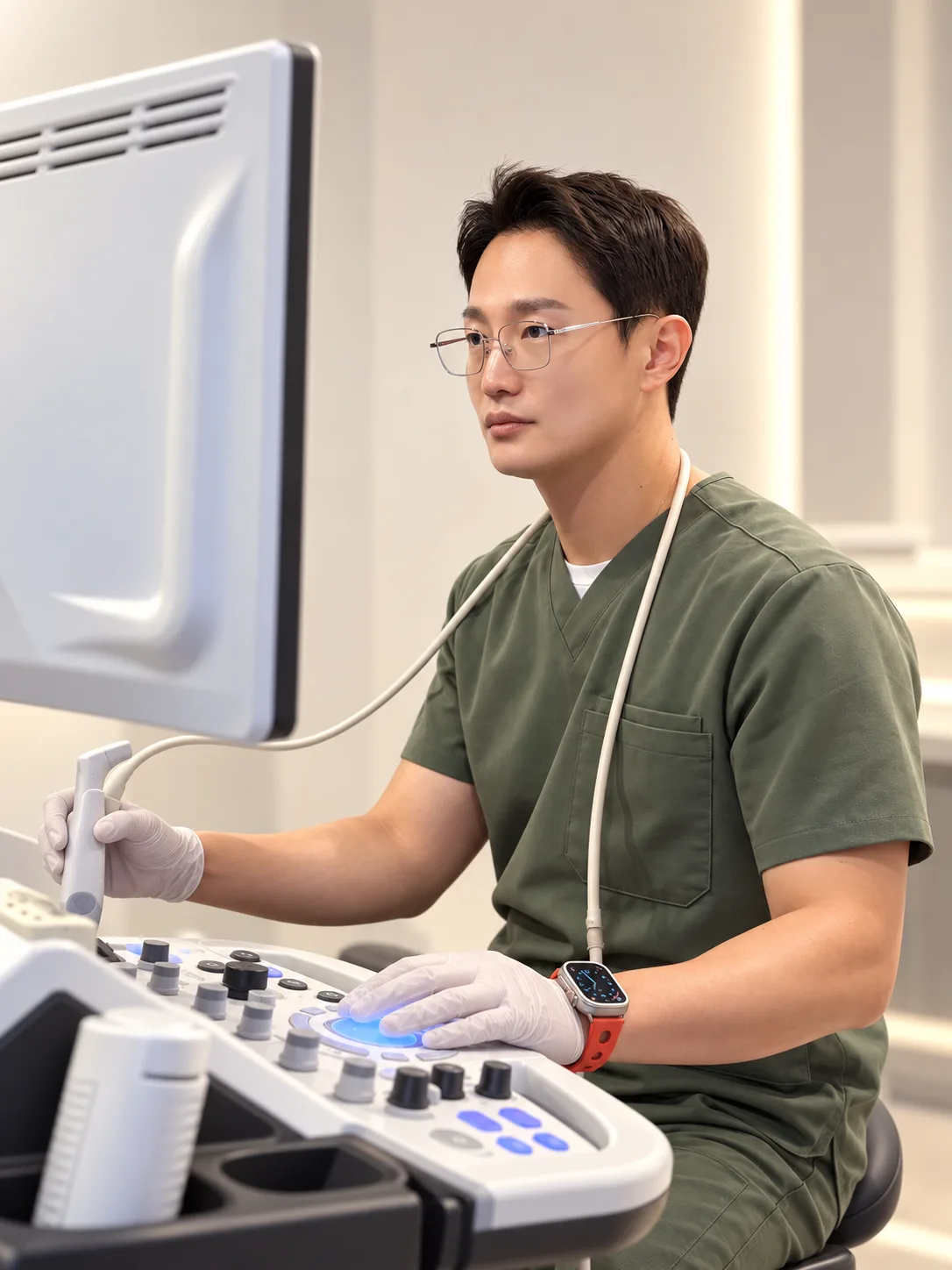
- Assess anatomy — Use Doppler ultrasound to record the type, location and extent of refluxing veins.
- Select treatment targets — Target veins related to symptoms, rather than every vein showing reflux.
- Choose the method — Match the method to vessel size, course and distance from nearby nerves.
I include recovery in planning, looking for ways to reduce wounds and discomfort and valuing the change patients feel in everyday life after treatment.
Consider recovery before choosing treatment
Thinking about how to reduce discomfort during recovery starts with treatment planning. Please bring these questions to your consultation too.
- Which symptoms bother you most, and how do they affect daily activities involving prolonged standing or sitting?
- When choosing treatment, what should I ask about returning to work, walking and compression care?
- Who should I contact, and how, if I am concerned about pain or skin changes after treatment?
What to discuss, from consultation to recovery
Topics in detail
Varicose vein assessment & ultrasound
Examination assesses varicose veins and skin changes; duplex ultrasound identifies the site and extent of reflux. Reflux testing is performed standing when possible. For superficial veins, a reflux duration over 0.5 seconds is commonly used.
Endovenous treatment
Options include thermal techniques such as laser and radiofrequency, and nonthermal techniques such as cyanoacrylate glue and mechanochemical ablation. Each has specific adverse effects. Dr. Seo has presented generalized urticaria after glue treatment and pigmentation after mechanochemical ablation.
Ambulatory phlebectomy & sclerotherapy
Tortuous tributaries that are difficult to pass with a catheter may be treated by removal through small incisions or by injecting a sclerosant.
Combined treatment
Different vessels in the same leg may require two or more methods. The reason for combining them should be explained by the vascular anatomy.
Recurrent varicose veins
Varicose veins returning after treatment have several causes. Ultrasound should first distinguish reopening of a treated vein from newly developed reflux.
Risks & adverse effects — Vein procedures can cause bruising, pain, pigmentation, phlebitis, altered sensation and, rarely, deep vein thrombosis. This is general information, not a replacement for individual care.
Related articles
- When is observation preferable to varicose vein surgery?
- Why does varicose vein treatment differ between patients?
- Does every reflux finding on ultrasound need treatment?
- Why combine methods for varicose vein treatment?
Care at da Re-Fit Clinic
Treatment, recovery and fees are described on the clinic website.