ABOUT
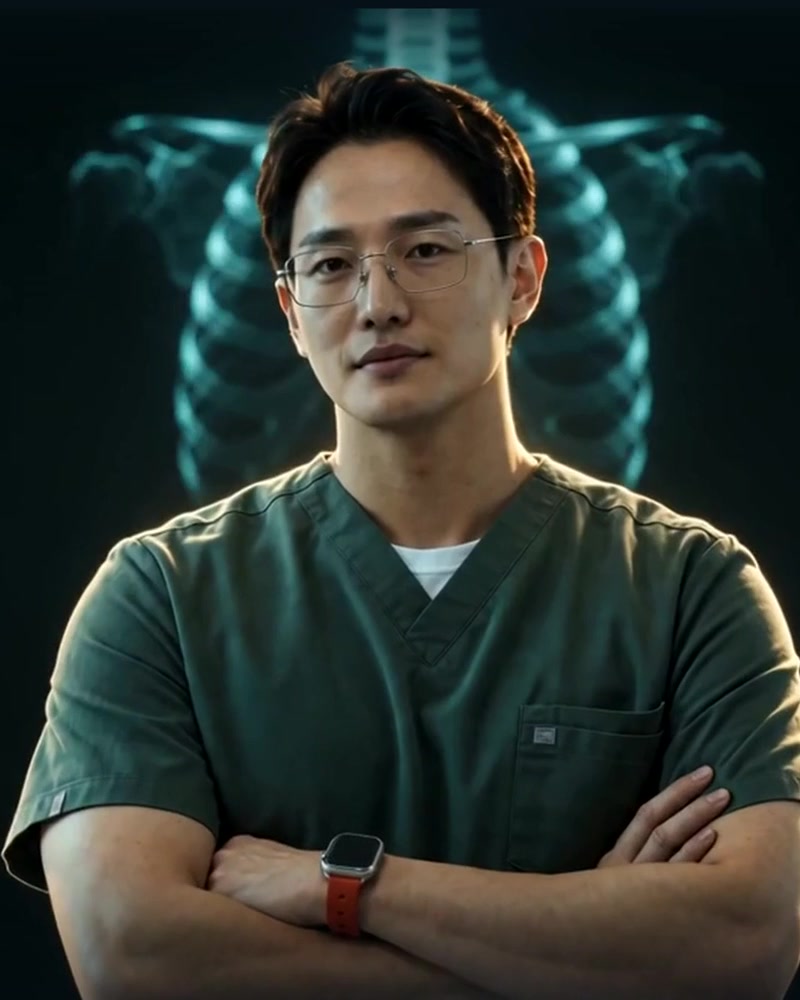
Dr. Dongju Seo
Cardiothoracic & Vascular Surgeon · Director, da Re-Fit Clinic
01 — INTRODUCTION
Care starts with what troubles the patient
I see the patient’s symptoms, discomfort and desired changes as the starting point of care. I believe the meaning of treatment lies in the difference patients feel and their satisfaction with daily life.
Scars and recovery after surgery are also important parts of treatment. I try to plan care with attention to ways of reducing discomfort during recovery.
As a cardiothoracic and vascular surgeon at da Re-Fit Clinic, I provide care in rib remodeling, venous disease and vascular laser treatment.
02 — PHILOSOPHY
Three priorities in my practice
Understand symptoms and desired changes
I want to understand which symptoms trouble each patient and what they hope treatment will change. Alongside the medical assessment of results, I value the changes and satisfaction patients experience in everyday life.
Include recovery in the treatment plan
I look for ways to reduce scars and discomfort during recovery. My planning considers not only the operation itself but also the time the patient lives through afterward.
Choose care that fits the individual
Medicine continues to change and advance. I learn new methods, but do not assume that newer means better. I aim to choose care that fits the patient’s condition and needs.
03 — EXPERIENCE
The moment I began to think beyond surgery
Thoracic surgery involves opening the chest to reach the heart and lungs. When I performed heart and lung operations, I focused on obtaining a clear surgical view so the operation could be carried out accurately.
Then I met adults who had undergone heart surgery as children. Their scars made them anxious about wearing low-cut clothes or swimwear. The operation had ended years earlier, but its marks still affected daily life.
That experience showed me that recovery and scars matter alongside precise treatment. Afterward, when opening a child’s chest for heart surgery, I hoped they would grow up able to wear a V-neck comfortably. I remember considering how to reduce the incision while preserving the view needed for surgery.
That experience continues to shape my practice. I believe treating a patient’s discomfort should also include efforts to reduce the discomfort that may arise during recovery.
04 — CHEST & VESSELS
A surgeon attentive to both outside and inside
The chest wall is what thoracic surgeons open and close to reach the organs and vessels within. Those vessels are also structures I have worked with throughout surgery. For me, the chest and blood vessels are closely connected in this way.
I have long been interested in correcting pectus excavatum and pectus carinatum, and have performed rib-fracture fixation with titanium plates. I was drawn to the way visible structural change can relate to patient satisfaction. My interest in rib remodeling grew from that experience.
Blood vessels, on the other hand, are largely hidden and easy to overlook. I have wanted to explain their importance to life and health. This is why I continue broadcasting and explaining alongside my vascular practice.
I want to be a surgeon who considers visible concerns, health within the body, and recovery after treatment together.
Q & A
Four questions about my approach to care
These answers are edited from Dr. Seo’s own account of his philosophy and experience.
What matters most to you when listening to a patient?
I want to understand which symptoms trouble the patient and what they hope treatment will change. Alongside test results, I want to consider how that discomfort affects daily life. I value the changes and satisfaction patients feel for themselves, as well as the outcome I assess as a doctor.
What made you place such importance on scars and recovery?
I met adults who had undergone heart surgery as children and still worried about choosing clothes because of their scars. Surgery was long over, but its traces remained part of their lives. That experience led me to think about reducing scars and discomfort during recovery alongside treating the condition accurately.
How do you assess a new treatment?
I keep learning about new approaches, but I do not assume that newer means better. I try to plan treatment around whether it fits the individual’s condition and hopes, while considering its burdens and limitations.
What change do you hope treatment will bring to a patient’s life?
I hope patients experience less discomfort and greater ease in everyday life. I want to be a surgeon who considers both visible changes and health within the body, and who thinks about the patient’s satisfaction after recovery.
05 — BACKGROUND
Qualifications & experience
- Specialty qualification
- Specialist in cardiothoracic and vascular surgery (South Korea)
- Current position
- Director, da Re-Fit Clinic
- Training & practice
- Cardiothoracic & Vascular Surgery, Asan Medical Center, Seoul
- International training
- Observership at Massachusetts General Hospital (MGH)
- Society / meeting
- Member, Korean Society for Thoracic and Cardiovascular Surgery
- Books
- Yeongyangje Ttanji Sajeon — a critical guide to supplements (Yakpalli; Korean edition)
06 — PRACTICE
Clinical areas & decision-making
Rib remodeling
I first listen to the changes patients want in their body shape and the discomfort they feel in daily life. I assess surgical suitability with chest anatomy and breathing in mind, including ways to reduce scars and discomfort during recovery.
Varicose veins & venous disease
I first consider how leg symptoms affect daily life, then look for treatment that fits the symptoms and vascular anatomy, including discomfort during recovery.
Telangiectasia & vascular lasers
I listen to concerns about visible small vessels and the changes patients hope for. I seek treatment suited to their skin and vessels, while considering ways to reduce discomfort during treatment and recovery.
In public interviews, I have also described my symptom-focused approach to vascular disease. Read the original interview
07 — RESEARCH & MEDIA
Researching and explaining
Research
Questions about discomfort and recovery also guide my research and presentations. On November 6, 2026, at the 58th Autumn Scientific Meeting of the Korean Society for Thoracic and Cardiovascular Surgery, I gave an oral presentation on recognition of thoracic complications after percutaneous rib osteotomy and readiness to respond.
My systematic review of minimally invasive rib remodeling safety from a thoracic surgery perspective was, on October 20, 2026, accepted by Aesthetic Plastic Surgery. As first and corresponding author, I examined pleural safety, pulmonary function, operator qualifications and limitations of existing research.
In vascular care, I also study discomfort that remains after treatment. I presented two venous-disease abstracts as first author at Asian Venous Forum 2026.
I have six published journal papers: two on venous disease while at da Re-Fit Clinic and four on cardiovascular surgery while at Asan Medical Center. Bibliographic details and original links are on the research page.
Research & source materials · ORCID researcher profile
Broadcasts & interviews
Since November 2020, I have made over 1,000 appearances on health-information broadcasts. Original links document appearances on After the Rain and press interviews.